
Information For

Wesleyan’s Eiko Otake

Pam Tatge, Wesleyan’s intrepid director of the Center for the Arts, recently sent out a note about Visiting Instructor Eiko Otake’s extraordinary project “Platform,” being seen this semester in New York. This work grows out of research and collaboration Eiko did for her piece “A Body in Places” at Wesleyan in the fall of 2015.

Eiko has a great team of Weconnected folks, as she told me in an email: “My current team includes dramaturge Mark McCoughan ’10, videographer Alexis Moh ’15, visual artist Megumu Tagami ’10, Lydia Bell (07, programing Director of Danspace Project, and my own sons, Yuta ’07 and Shin ’10.  In addition, I work closely with my life long advisor/producer/supporter Sam Miller ’75, and Paul Vidich ’77.”
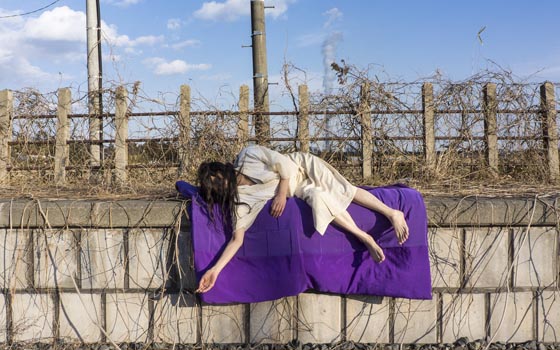
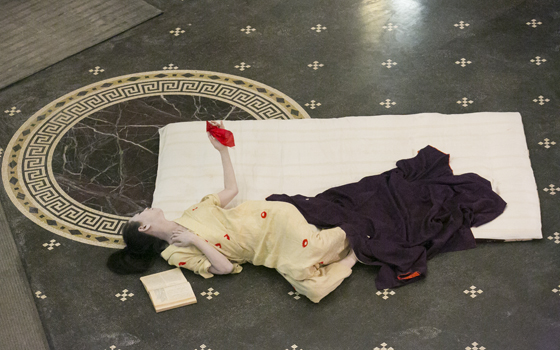
a-body-in-fukushima_event

eiko_otake_body_places_event(Photos by William Johnston, professor of history, professor of East Asian Studies, professor of science in society, professor in the environmental studies program)
Click here for an at-a-glance calendar.

We are hoping Wesleyan faculty, staff, students, and alumni who are in New York will attend the events below on Friday, March 11. The free talks include fellow Wesleyan faculty members William Johnston and Katja Kolcio. Please note that tickets are required if you’d like to stay and see the evening performance at 9 p.m.

You can read coverage of this project in recent articles from The New York Times here and here.

After Fukushima: A 24-hour Event
March 11 – March 12
March 11 marks the fifth anniversary of the earthquake, tsunami, and nuclear disaster in Fukushima. A photo collaboration between Eiko and photographer/historian William Johnston will be on display in the St. Mark’s Church sanctuary for 24 hours. Singers and poets will mark each hour with a song and poem. The day begins with:

Conversation Without Walls: Bearing Witness:
4 p.m. to 5 p.m.
Marilyn Ivy (Columbia University Associate Professor of Anthropology) and William Johnston (Wesleyan University Professor of History, East Asian Studies, Environmental Studies, and Science in Society)
Respondents: Gabriel Florenz (Director, Pioneer Works), Harry Philbrick (former Director, Pennsylvania Academy of the Fine Arts), and Julie Malnig (New York University Associate Professor and Chair of the Gallatin Interdisciplinary Arts Program)

5 p.m. to 6 p.m.
Karen Shimakawa (New York University Associate Professor and Chair of Performance Studies of the Tisch School of the Arts) and Ana Janevski (The Museum of Modern Art Associate Curator of Media and Performance Art)
Respondents: dance journalist Debra Levine and choreographer luciana achugar

6 p.m. to 7 p.m.
Yoshiko Chuma (Artistic Director and Choreographer of The School of Hard Knocks and Daghdha Dance Company) and Katja Kolcio (Wesleyan University Associate Professor of Dance and Environmental Studies)
Respondents: choreographer Koosil-ja and dancer, choreographer, teacher, writer, and editor Wendy Perron

7 p.m. to 8 p.m.
Q&A with all participants

Admission is free and you are encouraged to RSVP here.

Solo Performance by Eiko Otake
9 p.m.
$20 general public

All events are at Danspace Project at St. Mark’s Church, 131 East 10th Street, New York, NY 10003
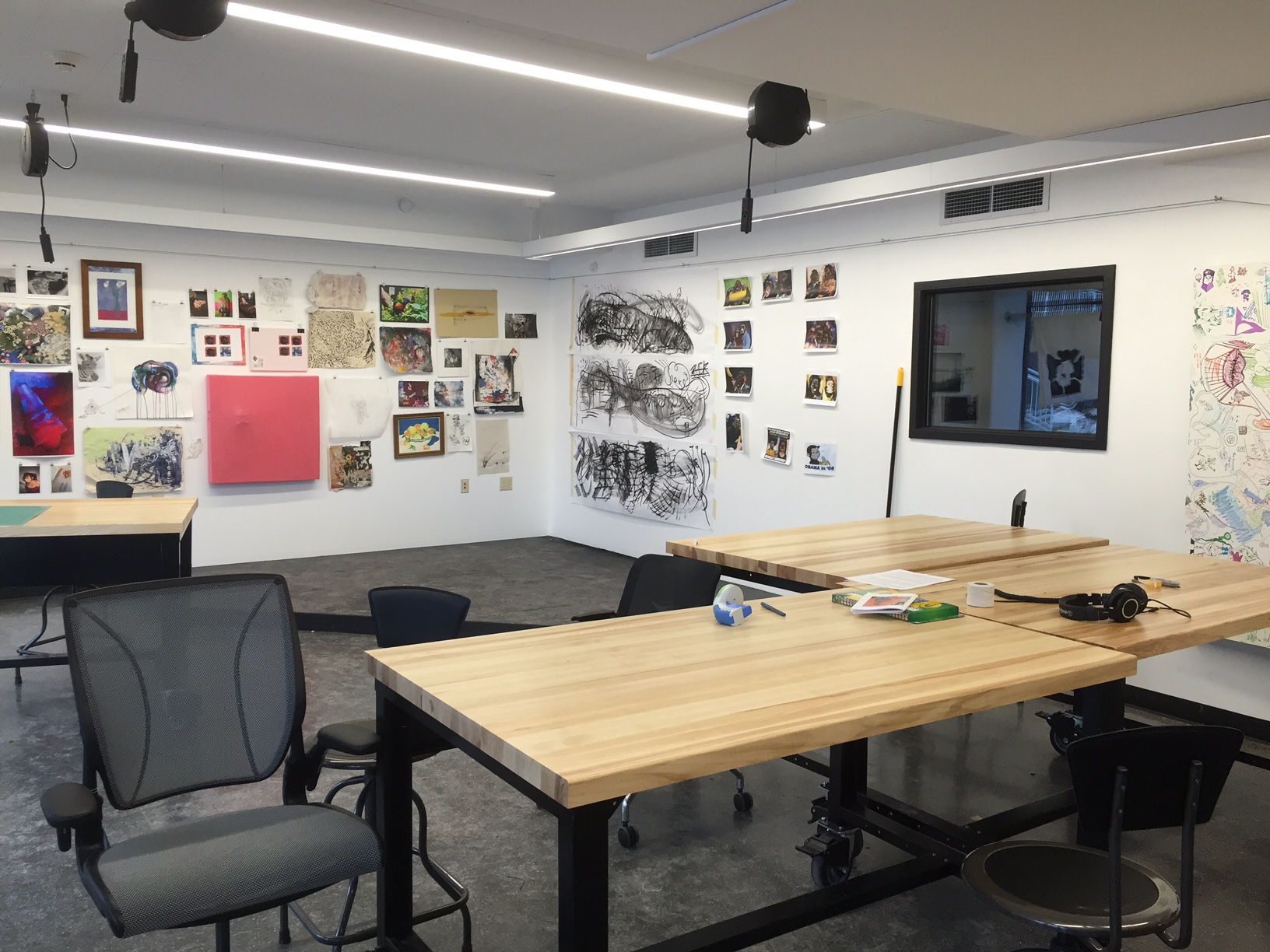
The Workshop Opens

A group of very enterprising students, Isaac Schneider ’16 and Rachel Day ’16 among them, approached me about a year ago about developing a space on campus in which students could design and build projects, plan organizations, and, most generally, make things that advanced their ideas, actions….their education. I pointed out that we created the Digital Design Studio just a few years ago for just this purpose, and that it was currently reaching many students and launching several projects.

Yes, exactly, they said. That’s why we need more spaces—and student-run spaces among them.

With the great cooperation of our Physical Plant and Student Life Staff, and with the input from lots of students, we have now opened The Workshop in the basement of Hewitt 8. I very much look forward to seeing the creative work that comes out of this space, and I look forward to finding more ways to empower students to make things that matter to them and to others beyond the university.

IMG_1959

IMG_1961[2]


IMG_1963[1]

Equity Task Force

I have received an interim report from the Equity Task Force — Tri-Chairs: Shardonay Pagett ’18 (student), Antonio Farias (staff), and Gina Athena Ulysse (faculty). Task Force Members: Caroline Liu ’18, Henry Martellier, Jr. ’19 (students); Elisa Cardona, Makaela Kingsley (staff); Matthew Garrett, William Johnston (faculty). Here are the headlines:

History: Reports of previous committees and task forces show that Wesleyan has made multiple attempts to address issues of difference and racial tensions, but to limited success at best. The same problems keep recurring.

Mission: The Presidential Task Force is reinforced by the Board of Trustees’ Statement on equity and inclusion as a blueprint to enact institutional change and our task is to facilitate that goal as best as possible.

Recommendation: The creation of an integrative educational experience that will continue to reach across all parts of campus life including students, staff, and faculty, through a physical center and institutional initiatives for the indefinite future.

Early Recommendations:

1. In direct response to our charge, we recommend that the university establish a new center that has a clear, intellectually grounded mission focusing on intercultural development and literacy, which integrates students, faculty, and staff inits core operations at the developmental stage to sustainably work towards deeper commitment to inclusion.

2. In order to recognize and address the broader historical and structural conditions that generated the IsThisWhy? protest and demands along with continuous patterns of inequity and retention problems among faculty and staff on campus, we recommend the university commit much-needed resources towards redressing these concerns and embark on a long-term, comprehensive, campus-wide initiative with concrete action plans to be incorporated in Wesleyan’s current and future strategic visions.

3. In conjunction with the aforementioned, we recommend continuation of the task force to work in tandem with members of the larger Wesleyan community to create effective mechanisms to coordinate, centralize, communicate, and support ongoing institutional change efforts. Ultimately, this task force should evolve into a standing institutional committee comprised of students, faculty, and staff.

The Task Force’s work continues, and on the staff side we have begun to explore possibilities for the Center mentioned in point 1. Most importantly, we are prepared to use resources to create a more equitable and inclusive educational experience for all our students. The full report is posted here.


Black History Month Continues

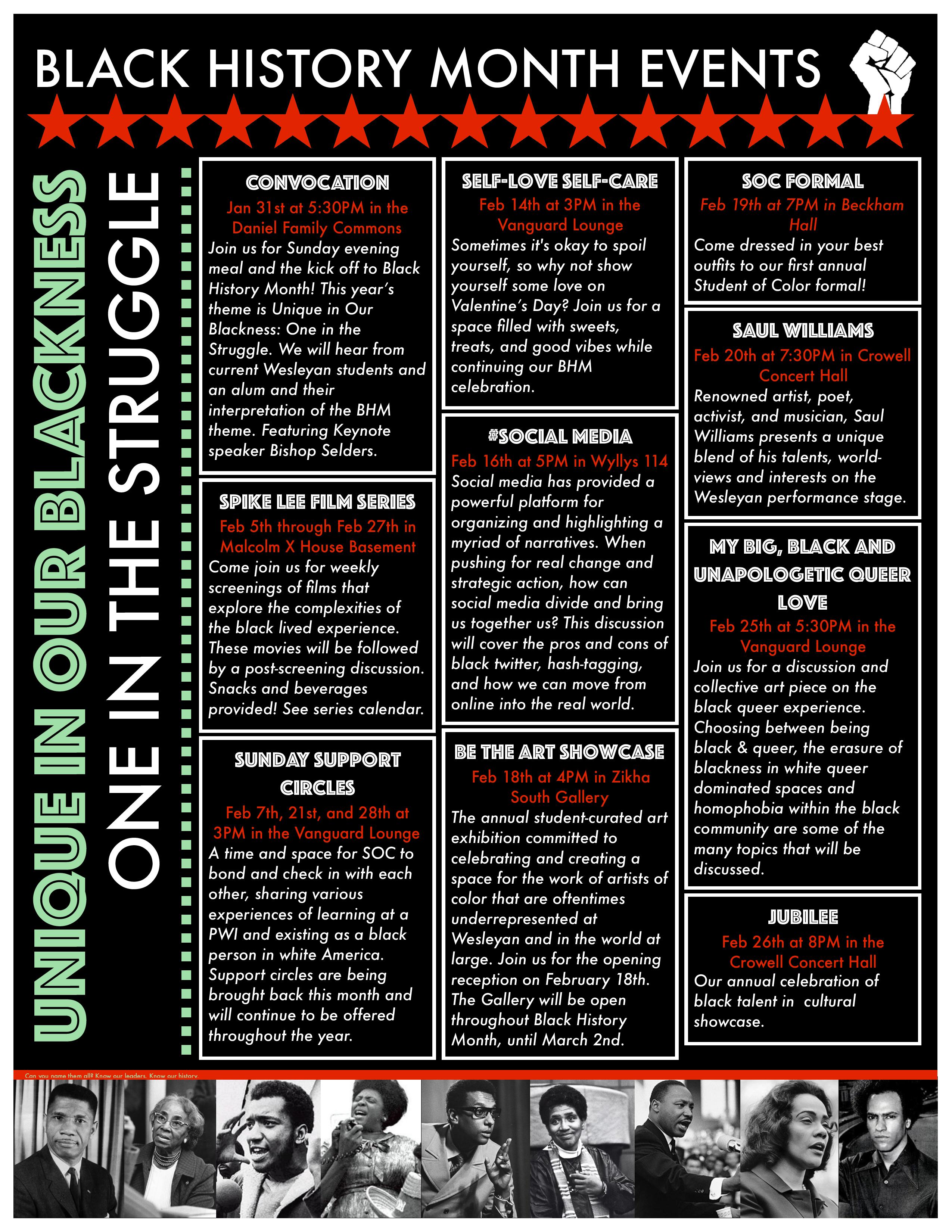
As we mark the midpoint of this cold month of February, it’s a good time to recall the resources on campus and elsewhere for Black History Month. Wesleyan began Black History Month with an engaged campus dialogue led by Dr. Dorceta Taylor that included students, faculty, staff, and Middletown community members.  Over 400 members of our campus and surrounding community attended the Rev. Dr. Martin Luther King Jr. Commemoration and were encouraged to find practical ways to find common ground on environmental justice. I encourage us all to take an active part in supporting the work students of Ujamaa have done to underscore various dimensions of the African-American experience.

BHM Events Calendar

There are so many resources available today to explore African-American history. Here are just two: The New York Times is publishing a series of photographs and other documents that illuminate the historical experience of blacks in the U.S.  You can find many in the “what’s going on in this series” pictures here. Digital Schomburg is an amazing compendium of sources on the global black experience. Exploring these sites, and attending various events on campus can help make Black History month more meaningful for everyone.


Time for Teacher Award Nominations!

It’s that time of year again. The university is soliciting nominations for Wesleyan’s Binswanger award for teaching excellence. Here’s a little history:

The Binswanger Prize for Excellence in Teaching was inaugurated in 1993 as an institutional recognition of outstanding faculty members. One to three Binswanger Prizes are presented each year and are made possible by the generosity of the Binswanger family that counts numerous Wesleyan alumni, alumnae and parents in its ranks. The standards and criteria for the annual prizes shall be excellence in teaching, as exemplified by commitment to the classroom and student accomplishment, intellectual demands placed on students, lucidity, and passion.

Recommendations may be based on any of the types of teaching that are done at the University including, but not limited to, teaching in lecture courses, seminars, laboratories, creative and performance-based courses, research tutorials and other individual and group tutorials at the undergraduate and graduate level.

Juniors, seniors, graduate students and alumni from the last decade are eligible to nominate up to three professors. Nominations are made through Wesconnect here. GLS students can use their e-portfolio to make nominations. Professors who have taught at Wesleyan for at least a decade are eligible.

You can find out more about the Binswanger Prize, as well as watch or listen to interviews with some previous winners here.

Speaking of great teaching, this week I was able to attend the first lecture in the Center of the Humanities Monday Night Series. The talk by Catherine Malabou was intense, philosophical and very relevant to major issues in the world. The theme this term is comparison, and each week the Center serves up great presentations. On Monday, February 8 at 6 p.m. Wesleyan history Prof. Jeffers Lennox will speak on “Canada, the Revolution, and Creating the United States.”

Check out the new events calendar for a list of various happenings on campus.

Many, Many More Applicants to Wes

As readers of this blog know, I spend a lot of time writing about the value of a pragmatic liberal education. I even “predicted” a resurgence of interest in this great American form of education in an short piece for the Wall Street Journal.  But even I was surprised when I heard we had a tremendous surge in the number of applications we’d received at Wesleyan. The class of 2020 will be chosen from our largest applicant pool ever.  As of Feb. 1, 12,026 students had applied, marking a 22 percent increase over the previous year and a 10 percent increase over the previous all-time high three years ago for the Class of 2017. Here’s the Wes news story about the applicant pool:

“We’re very pleased by not only the sheer number of students who can see themselves at Wesleyan—amongst the highest of any liberal arts college—but also by the highly talented and diverse nature of the applicant pool,” said President Michael Roth. “I’d like to believe this is evidence that we’re about to see a resurgence of pragmatic liberal arts education in this country.”

The number of applications rose fairly consistently across the country and within different demographic groups. The pool is quite diverse, with 36 percent self-identifying as students of color. Increasing the representation of those first-in-their-family to go to college and international students are high priorities for Wesleyan, so “it is particularly exciting to see increases in applications from first-generation students” —up 41 percent from last year—and those outside the U.S. — up 24 percent, said Dean of Admission and Financial Aid Nancy Hargrave Meislahn.

“We are excited to see such a high level of interest in Wesleyan!” Meislahn said. “Last year we felt that the word about our change to test-optional hadn’t yet reached all those top students who we want to look seriously at the opportunities here, especially students without sophisticated college advising or who might be intimidated by Wesleyan’s typically daunting score profile. This surge in applications is wonderful testimony to our success on that front.”

Regular decision applicants will be notified of admission decisions on March 25, and all 2020 prefrosh are welcome to campus for WesFest 2016 on April 13-15.

People have been asking me why we’ve had such strong application pool growth. Surely, our decision to go test optional is one factor. We did that because we believe that standardized tests only tell a small part of the story for many applying to college. Our research indicated that going test optional would bring us more applications from under-represented groups—and indeed this has been the case. But our application growth among those who did submit scores was also in double figures.

In any case, we are delighted that the message about Wesleyan is getting out to more students in more parts of the world. On campus we continue to work together to make Wesleyan more equitable and inclusive—a place ever more effective in empowering students to lives of meaning and purpose after graduation. That work will continue, and I look forward to finding out later this spring which new Wesleyans will be joining in this endeavor!