
Information For

SCOTUS Affirms Affirmative Action

I was delighted today to learn that the Supreme Court has upheld the ability of colleges and universities to practice a holistic admissions process that includes attention to race.  This will provide opportunities to historically marginalized groups while giving the whole campus culture the benefits of diversity. Grades, or test scores, or any one ranking would not produce an educationally worthy outcome.  A key passage in Justice Kennedy’s opinion, quoted by the Chronicle of Higher Education, put it this way:

A system that selected every student through class rank alone would exclude the star athlete or musician whose grades suffered because of daily practices and training. It would exclude a talented young biologist who struggled to maintain above-average grades in humanities classes. And it would exclude a student whose freshman-year grades were poor because of a family crisis but who got herself back on track in her last three years of school, only to find herself just outside of the top decile of her class.

For education to play a role for social mobility and against entrenched inequality, we need affirmative action as part of a holistic admissions process. This allows schools to build classes that give students powerful learning experiences and individuals opportunities to convert their academic experience into empowerment beyond the university.

As pleased as I am with this court ruling, I am dismayed that the deadlocked  SCOTUS has stymied President Obama’s efforts to make use of more humane immigration policies for people who have already built lives in communities across the United States. In the coming years, Wesleyan will consider as domestic applicants the undocumented students who have had the great bulk of their schooling in the USA. But I am so sorry their families will continue to live with the threat of deportation because of this ruling.

It’s up to all of us to make what Carol Geary Schneider, outgoing president of the Association of American Colleges and Universities, has called “constructive engagement with difference.” I’ll end this post with her good words:

Even as we celebrate this important Supreme Court decision affirming campus diversity as a compelling educational interest, therefore, I urge educators across the country to recommit to the hard work of holding our institutions, our students, our faculty, and ourselves responsible for helping students achieve this essential capacity—constructive engagement with difference—that a quality college education includes. Creating a diverse campus community is the first step to achieving this goal; preparing students to work productively across difference—whatever their major—is the next critical frontier in higher education’s long-term efforts to make excellence inclusive.


Wesleyan Announces “Hamilton” Prize

Colleges and universities love to celebrate successful alumni. The most compelling stories about the value of the undergraduate years are built on the connections between what one studies on campus and success beyond the university. At Wesleyan, we do whatever we can to shine a bright light on the achievements of our graduates—in the sciences and in the public sphere, in sports, in the business world and in academia. A few years ago we had a field day when In The Heights won Tony Awards and thrust its star, Lin-Manuel Miranda ’02, into the spotlight. He had originally produced the show on campus as a student, and then with director and Wesleyan alumnus Tommy Kail ’99, and playwright Quiara Alegria Hudes (now on the Wesleyan faculty), made a sparkling Broadway debut.

Even after the great success of Heights, nobody was really prepared for the truly revolutionary musical Hamilton. But given the liberal education that Miranda and Kail received at Wesleyan, maybe we should have seen something like this coming. Steeped in history and uncannily responsive to contemporary culture, it is an extraordinary artistic achievement at once traditional and experimental. That’s the kind of synthesis that those of us working in liberal arts colleges are always hoping for: making the past come alive in ways that expand possibilities in the present. Hamilton’s source is a deep historical biography by Ron Chernow, which Miranda somehow transformed into a hip-hop opera that draws on Broadway traditions to make something profoundly original.

As we thought about the best way to honor this achievement, we decided to create a major prize to recognize creative potential in a student beginning her or his academic career at Wesleyan. This week we are announcing the Hamilton Prize: awarded to the incoming student (class of 2021) who has submitted (with the application for admission) a work of fiction, poetry, song, or creative nonfiction judged to best reflect originality, artistry and dynamism. The Hamilton Prize includes a full tuition scholarship at Wesleyan for four years. The winner of the prize will be selected by a panel of distinguished faculty and alumni.

Hamilton is a major event, and this is a major prize.  Wesleyan has had a strong history of great writing. From poet laureate Richard Wilbur back in the days when I was a student to novelist Amy Bloom, biographer Lisa Cohen and playwright Quiara Alegria Hudes today, dynamic writers have made our campus their home. The tension between the traditional and experimental continues to energize students here—from the graphic novelist finding new audiences to the slam poet or songwriter wowing fellow students, bold writing is often combined with performance on campus. With the Hamilton Prize, we mean to signal our pride in a diverse array of creative endeavors.

When Hamilton’s generation considered higher education, many believed it was crucial that students not think they already knew at the beginning of their studies where they would end up when it was time for graduation. For all those who have followed on this American path of liberal education, learning was all about exploration – and you would only make important discoveries if you were open to unexpected possibilities. W.E.B. Du Bois was on that path when he argued a century later that a broad education was a form of empowerment that must be open to those disenfranchised by the economy or by legacies of discrimination. Lin-Manuel Miranda was also on that path when he created a musical of revolution that shows how the proverbial “dead white men” can be re-imagined for our time.

As some schools succumb to fears of being left behind and choose vocational shortcuts for their curriculum, we who believe in the power of pragmatic liberal education must develop broad, contextual learning that enables our graduates to pursue meaningful work and lifelong learning. Yes, ours is a merciless economy characterized by deep economic inequality, but that inequality must not be accepted as a given; the skills of citizenship and the powers of creativity enhanced through liberal learning can be used to push back against it.

At a time when many worry about the fate of the creative humanities at American universities, Hamilton reminds us, at many levels, that education can help enlarge the power of engaged citizens to overcome traditional hierarchies. Wesleyan University has created the “Hamilton Prize” to reflect our commitment to educating young people who, after all, have the potential to revitalize our economy, animate our citizenry and energize a culture characterized by connectivity and creativity.

Defending Against Terror and Hate

How awful it is to write messages that begin with “my heart goes out to…” This morning’s attack at a gay nightclub in Orlando is a repulsive act of hatred and terror, already embraced by ISIS. I learned of this atrocity when my plane landed in New York a short time ago. At moments like these we are reminded of our vulnerability, of the awful frequency of mass shootings. We should also be mindful of the crucial work of the struggle against terrorism and the protection of freedom.

As I make my way back to Middletown, I am also reminded of our solidarity, and of our shared commitment to creating a campus culture free of violence and hate. May we redouble our efforts to stand against enmity and cultivate a climate of equity and inclusion.

And may the memory of those massacred this morning in Orlando be a blessing to their friends, family, and all of us who struggle against hatred and violence.

Wesleyan in London

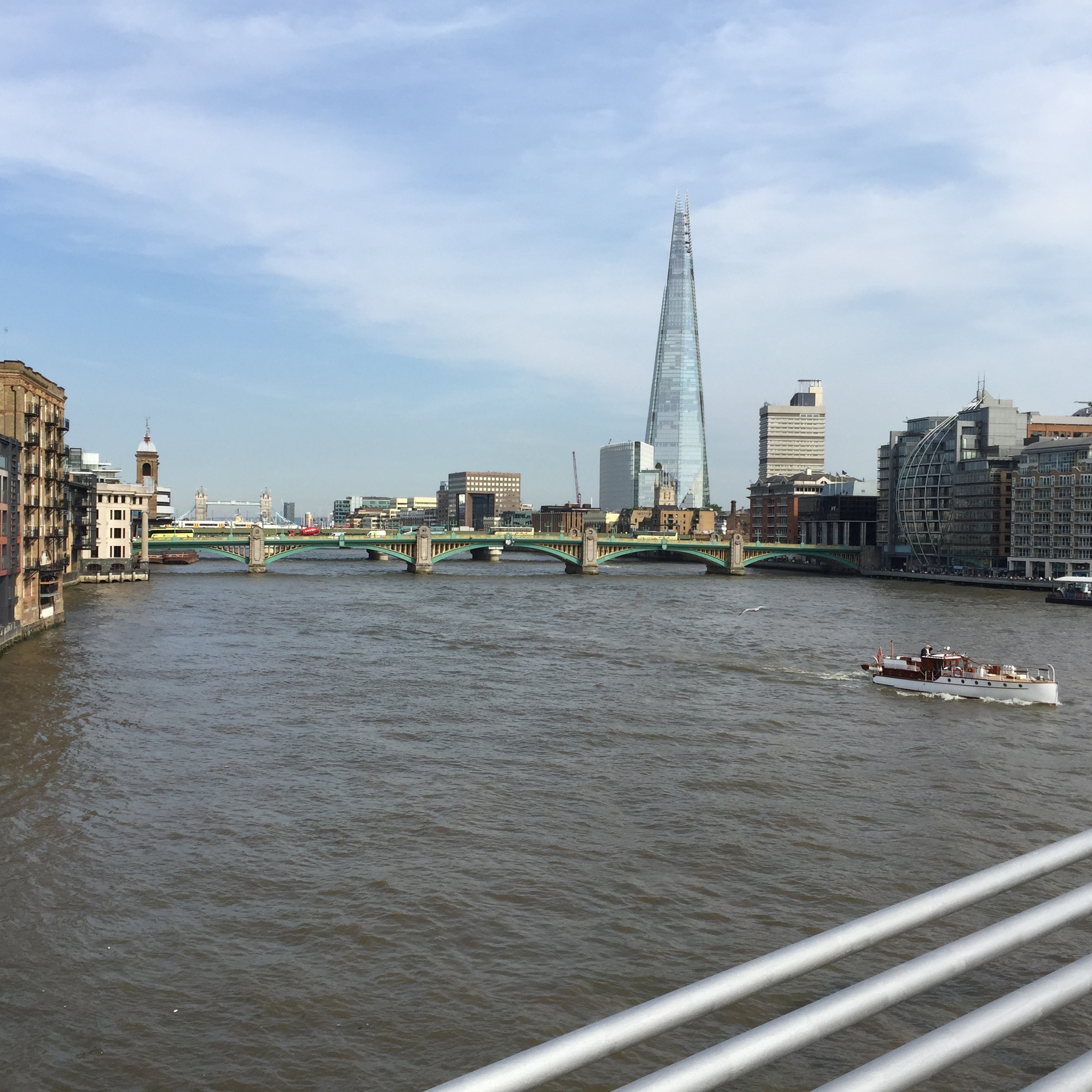
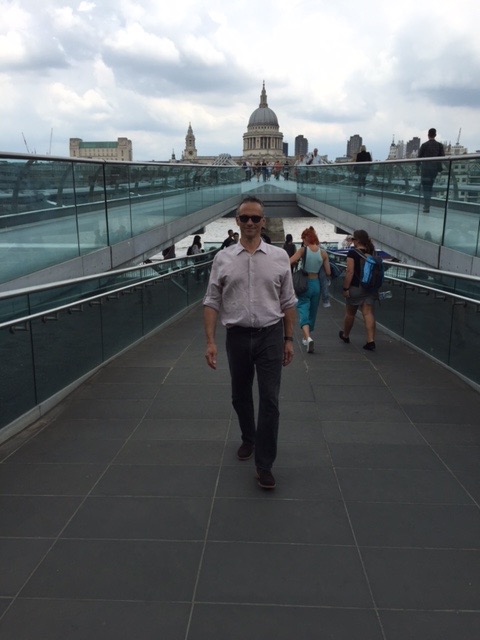
Kari and I are in London for a few days. She gave a paper at a conference on the French philosopher Jacques Derrida, and I hosted an event with about 50 Wesleyans who live on this side of the Atlantic. There was a great mix of folks at the event. Alumni from each decade since the 1960s, and current students studying abroad—and even a few pre-frosh from the Class of 2020.

I had the great pleasure of meeting up with a few of my old students who have settled in London. I love hearing about the variety of ways their education continues to resonate in their lives and work.

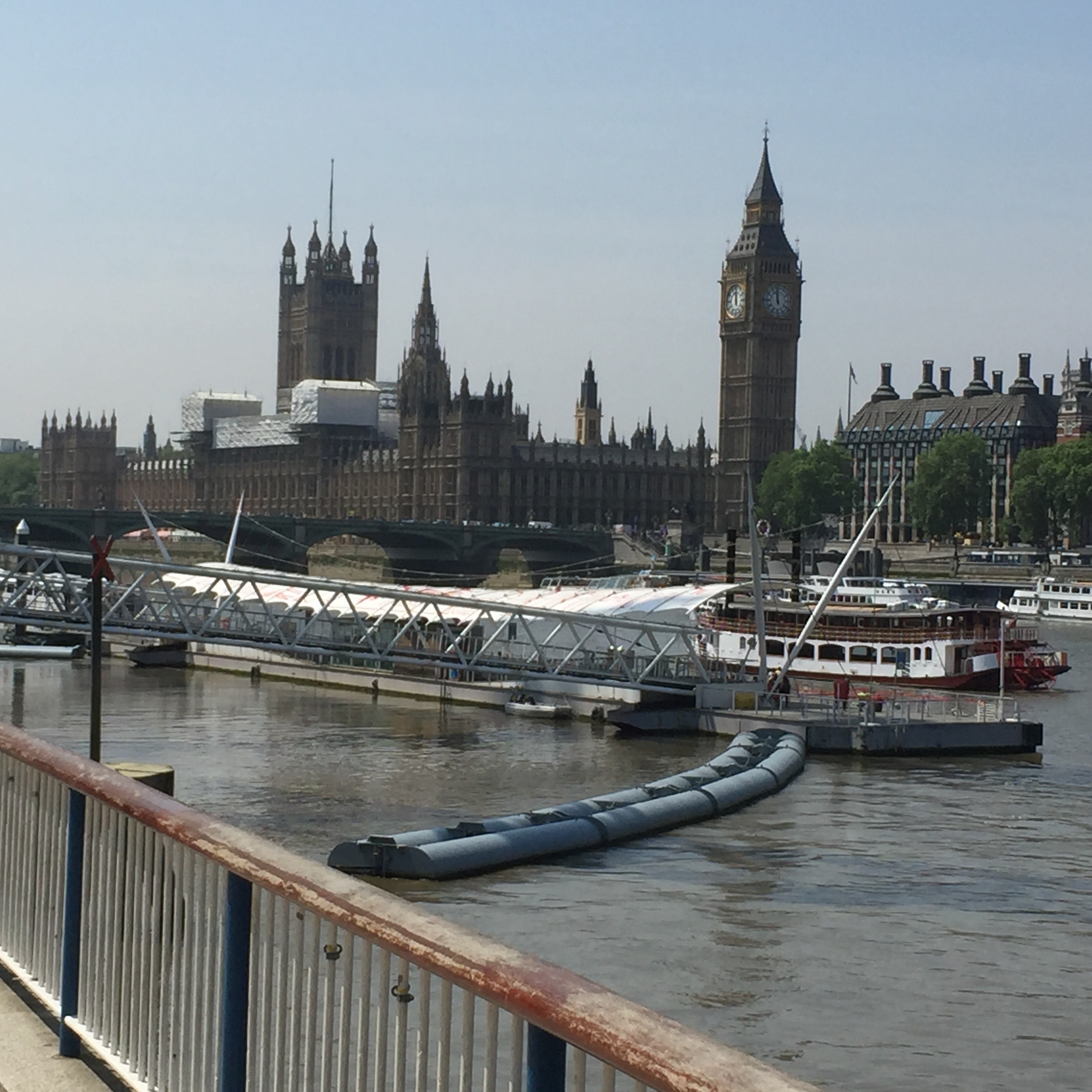
We’ve seen some great art and have marveled at the new buildings that seem to be sprouting is this incredibly busy city. Think I’ll head over to the Freud Museum to get my bearings…

IMG_0318

IMG_2420 IMG_2422

Tomorrow, back to Middletown!